
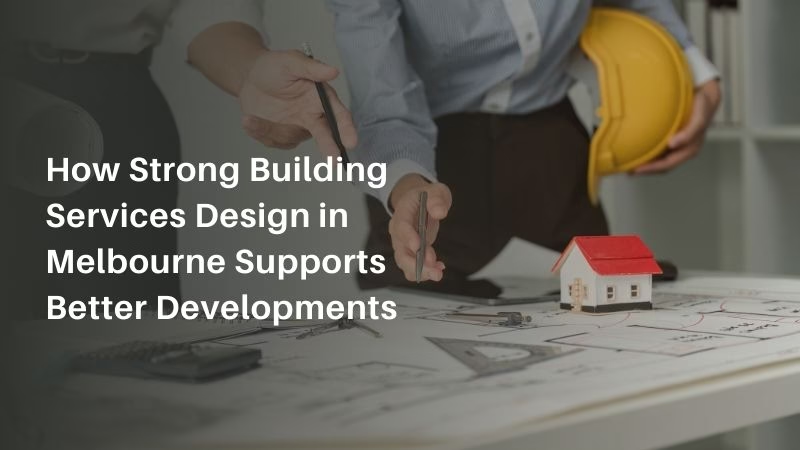
How Strong Building Services Design in Melbourne Supports Better Developments
As building services design engineers in Melbourne, we see the same pattern repeatedly: projects that succeed are the ones where engineering decisions are resolved early, coordinated properly, and aligned with how the building will actually operate.
Strong building services design isn’t just about compliance. It’s about reducing uncertainty for developers before construction starts by designing services that are buildable, efficient, and future-ready.
Here’s what we focus on, and why developers choose to engage experienced building services engineers early.
1. Understanding how the building will actually operate
Every development starts with intent, how the building will be occupied, operated, and adapted over time. Our role is to ensure the services design supports that intent, not works against it.
During mechanical engineering design, for example, we assess:
- Occupancy density and zoning requirements
- Operating hours and after-hours use
- Tenant flexibility and future layout changes
This helps avoid oversized systems, poor thermal comfort, or rigid zoning that limits leasing flexibility later. Good building services design starts with understanding real-world use, not generic assumptions.
2. Resolving compliance early, not during construction
Melbourne’s regulatory environment is complex, and unresolved compliance is one of the biggest drivers of redesign and delay.
As part of our role, we address compliance early by:
- Integrating fire strategies into layouts from the outset
- Aligning ventilation and indoor air quality requirements with architectural intent
- Coordinating essential services across electrical and fire systems
In fire protection engineering, early decisions around egress, fire compartmentation, detection, and essential services influence almost every other discipline. Resolving these early reduces authority issues and avoids costly late-stage changes.
3. Designing systems that are practical to build
A technically compliant design can still cause problems if it doesn’t reflect construction reality.
We place strong emphasis on buildability by considering:
- Plant room sizing and access
- Logical service routes and riser capacity
- Clear coordination between disciplines
- Minimising reliance on “site resolution”
For example, during electrical engineering design, we consider switchboard locations, riser capacity, and future load growth — not just lighting and power layouts. These decisions directly impact construction sequencing and long-term adaptability.
4. Balancing upfront cost with long-term performance
Lowest capital cost rarely delivers the best long-term outcome.
When developing hydraulic engineering design, we look beyond compliance to consider:
- Water pressure and system performance
- Hot water generation strategies
- Maintenance access for valves, pumps, and meters
- Stormwater management suited to Melbourne conditions
The same lifecycle thinking applies across mechanical and electrical systems — ensuring energy efficiency, maintainability, and operational simplicity are considered from the start.
Coordinating all services as one system
One of the biggest advantages of engaging experienced building services consultants Melbourne developers trust is coordination.
Rather than treating each service in isolation, we coordinate mechanical, electrical, hydraulic, and fire engineering decisions so they work as one integrated system. This reduces clashes, RFIs, and variations — and gives developers greater confidence when approving documentation.
How Decobu Supports Better Developments
At Decobu, we support developers by delivering coordinated building services design in Melbourne that reduces risk before projects reach site.
Our role is to:
- Get involved early to shape service strategies
- Resolve coordination and compliance issues before approvals
- Design services that are practical to build and operate
- Provide clear documentation that supports smoother tendering and construction
By taking an integrated, build-focused approach across mechanical, electrical, hydraulic, and fire engineering, we help developers move forward with confidence — knowing services decisions support the broader project goals.
Final thoughts
Strong building services design doesn’t draw attention to itself — but poor design always does.
As building services design engineers, our job is to make complexity manageable, risks visible early, and approvals easier to navigate. When services are coordinated properly from the start, developments perform better — during construction and long after handover.
That’s the value of strong building services design Melbourne projects.
FAQs
1. What does a building services design engineer do?
A building services design engineer plans and coordinates mechanical, electrical, hydraulic, and fire systems to ensure buildings operate safely, efficiently, and in compliance with regulations.
2. When should developers engage building services engineers?
Ideally during early design stages, before approvals and tender issue, when engineering input can still influence layouts and reduce downstream risk.
3. Why is coordinated building services design important?
Coordination reduces clashes, variations, and construction delays by resolving conflicts between systems before work begins on site.
4. How does good building services design reduce long-term costs?
Well-designed services improve energy efficiency, maintenance access, and system reliability, lowering operational and lifecycle costs.
5. Do all developments require the same level of building services design?
No. The level of engineering detail depends on the building’s size, use, and complexity, with commercial and institutional projects typically requiring greater coordination.
Ready to discuss your project?
If you’re planning a development or reviewing building services documentation, Decobu can help.
We deliver coordinated, practical building services design in Melbourne that supports better decisions, smoother construction, and stronger long-term outcomes.
Get in touch with Decobu to start the conversation.
Found Interesting? Share the insights
Related Posts

How Mechanical Engineering Consulting Improves Energy Efficiency in Commercial Projects
How Mechanical Engineering Consulting Improves Energy Efficiency in Commercial Projects Commercial buildings across Australia face increasing pressure to reduce energy use while keeping occupants safe
Why Every Commercial Project Needs an Experienced Electrical Design Engineer
Why Every Commercial Project Needs an Experienced Electrical Design Engineer Electrical design is one of the most influential parts of any commercial development yet it’s
Why Early Hydraulic Engineering Services Matter for Australian Construction
Why Early Hydraulic Engineering Services Matter for Australian Construction Hydraulic systems sit at the core of every building — managing water supply, drainage, stormwater, gas,
Electrical Design Engineering: What Sydney Developers Need to Ask Before Starting
Electrical Design Engineering: What Sydney Developers Need to Ask Before Starting Electrical design plays a much bigger role in modern buildings than many developers realise.

3 Mechanical Design Mistakes That Cost Building Owners in Australia
3 Mechanical Design Mistakes That Cost Building Owners in Australia Mechanical design isn’t usually the first thing people think about when planning a building —
Why Do Brisbane Projects Need Expert Fire Engineering Consultants?
Why Do Brisbane Projects Need Expert Fire Engineering Consultants? Introduction Fire safety is one of the most vital aspects of any construction project — yet