
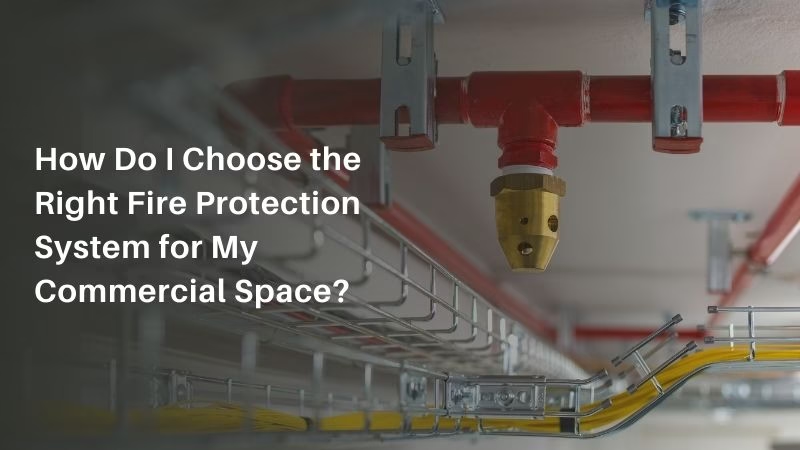
How Do I Choose the Right Fire Protection System for My Commercial Space?

How Do I Choose the Right Fire Protection System for My Commercial Space?

fire engineering consultants melbourne

When it comes to fire safety in commercial buildings, there’s no one-size-fits-all answer. The right fire protection system not only safeguards lives and property but also ensures you meet Australian compliance standards. Whether you’re working with fire engineering consultants Melbourne on a new office tower or upgrading a warehouse in Brisbane, your fire protection strategy should be tailored to your building’s layout, use, and risk profile.

In this guide, we’ll break down how to choose the right fire protection system for your commercial space — in plain language, with practical steps you can apply today.

Why Fire Protection Design Matters

In Australia, fire incidents cause millions in property damage every year and can lead to severe operational downtime. The right system helps:

  • Save lives by enabling safe evacuation
  • Protect assets and minimise downtime
  • Lower insurance premiums through risk reduction
  • Meet National Construction Code (NCC) and Australian Standards (e.g., AS 1851, AS 2118, AS 2419)

Beyond compliance, a well-designed system offers peace of mind — knowing your building is prepared for emergencies.

Step 1: Understand the Two Main Types of Fire Protection

There are two key categories of fire protection you’ll need to plan for:

1.Passive Fire Protection (PFP)

Purpose: Contain or slow the spread of fire and smoke

Examples: Fire-rated walls, floors, doors, fire-resistant glazing, intumescent coatings, compartmentation

Benefits: Maintains building integrity long enough for safe evacuation

Australian context: Commonly required in multi-storey buildings under NCC Part C

In larger retail spaces, such as those in Brisbane, passive systems like compartmentation and fire-rated walls are essential to slow fire spread and give occupants time to evacuate.


2. Active Fire Protection (AFP)

Purpose: Detect, suppress, or extinguish fires

Examples: Sprinkler systems, smoke detectors, fire alarms, fire hydrants, gaseous suppression systems

Benefits: Rapid response to control a fire before it spreads

Australian context: AS 2118 sets detailed requirements for sprinkler systems in commercial spaces

In high-rise developments, engaging specialists in mechanical engineering services Sydney can ensure that smoke control systems, alarms, and sprinklers work together to meet both NCC and local council requirements.

Step 2: Assess Your Building’s Risk Profile

Before choosing a system, ask:

  • What type of building is it?
    High-rises often require pressurised stairwells and sprinkler coverage; warehouses may prioritise hydrants and high-volume sprinklers.
  • What’s inside?
    Offices may only need standard sprinklers, but chemical storage might need foam or inert gas suppression.
  • How many people are on-site?
    Higher occupancy means faster detection and more evacuation points.
  • Is it a new build or retrofit?
    Retrofitting may require creative routing to avoid major structural changes.

Step 3: Know Your Compliance Requirements

In Australia, your fire system design must comply with:

  • NCC (National Construction Code) — minimum requirements vary by building class
  • Australian Standards — including:
    • AS 1851 – Routine service of fire protection systems
    • AS 2118 – Automatic fire sprinkler systems
    • AS 2419 – Fire hydrant installations
  • Local council regulations — may impose stricter rules or require additional approvals

For example, in heritage-listed properties, fire safety engineering Melbourne can involve additional measures to protect building integrity while meeting strict fire safety codes.

Step 4: Factor in Maintenance and Lifecycle Costs

Fire systems aren’t “set and forget.” You need to plan for:

  • Routine testing and certification (monthly, quarterly, annually)
  • Replacement cycles (e.g., smoke detectors every 10 years, extinguishers every 5 years)
  • Easy access for inspection — a common oversight that makes future maintenance costly

Step 5: Engage a Fire Protection Engineer Early

Engaging a fire protection engineering team early ensures:

  • A complete risk assessment before design

  • Seamless integration with mechanical, electrical, and hydraulic services

  • Compliance from day one, avoiding redesign costs

  • Optimised performance for your building’s specific use case

In Adelaide, for instance, early collaboration between fire safety consultants and building services engineers can prevent system clashes and avoid costly redesigns later.

Common Mistakes to Avoid

  • Focusing only on cost instead of whole-of-life safety and compliance
  • Neglecting passive protection in favour of active systems
  • Late-stage retrofitting, leading to costly redesigns
  • Poor coordination with other services, creating system clashes

The Decobu Approach: Fire Safety Without Compromise

At Decobu, we believe fire safety should be built into the project from day one, not added as an afterthought.

Our approach includes:

  • Integrated MEPF Design — We coordinate mechanical, electrical, and hydraulic services with fire protection to avoid clashes and delays.
  • Regulatory Expertise — Our engineers understand NCC requirements and Australian Standards inside-out, so your system is compliant the first time.
  • Tailored Solutions — From fit-outs in Sydney’s CBD to large-scale industrial builds in Perth, we design systems that match your building’s function and risk profile.
  • Lifecycle Thinking — We consider maintenance, inspection, and operational costs from the start, ensuring performance and affordability over time.

FAQ: Fire Protection for Commercial Spaces in Australia

1.Do all commercial buildings in Australia need sprinklers?

Not always — requirements depend on building class, height, and use as per the NCC. High-rise and certain high-risk spaces usually require sprinklers.

2.What’s the difference between passive and active fire protection?

Passive systems (like fire walls and doors) contain fire, while active systems (like sprinklers and alarms) detect and suppress it. Both are important.

3.How often should fire systems be tested?

As per AS 1851, testing can be monthly, quarterly, or annually depending on the component. For example, sprinklers require monthly checks.

4.Can I upgrade my fire protection without major construction?

Yes — retrofits can often integrate new systems without structural overhauls, especially with early engineering involvement.

5.Who is responsible for fire safety compliance in a commercial building?

The building owner or manager holds ultimate responsibility, though contractors and consultants must ensure systems are designed and installed to code.

Final Word

The right fire protection system for your commercial space in Australia isn’t just about ticking a compliance box — it’s about protecting lives, safeguarding investments, and keeping your business running even after an incident. By understanding your building’s risk profile, blending passive and active protection, and involving specialists early, you can create a system that’s safe, compliant, and cost-effective. 

Need guidance? 

Decobu provides passive fire protection solutions and integrated MEPF design services across Australia — ensuring your project is safe, compliant, and built for long-term performance. Contact us today to discuss your fire protection needs.

Found Interesting? Share the insights

Facebook
X
LinkedIn
WhatsApp
Reddit

Related Posts